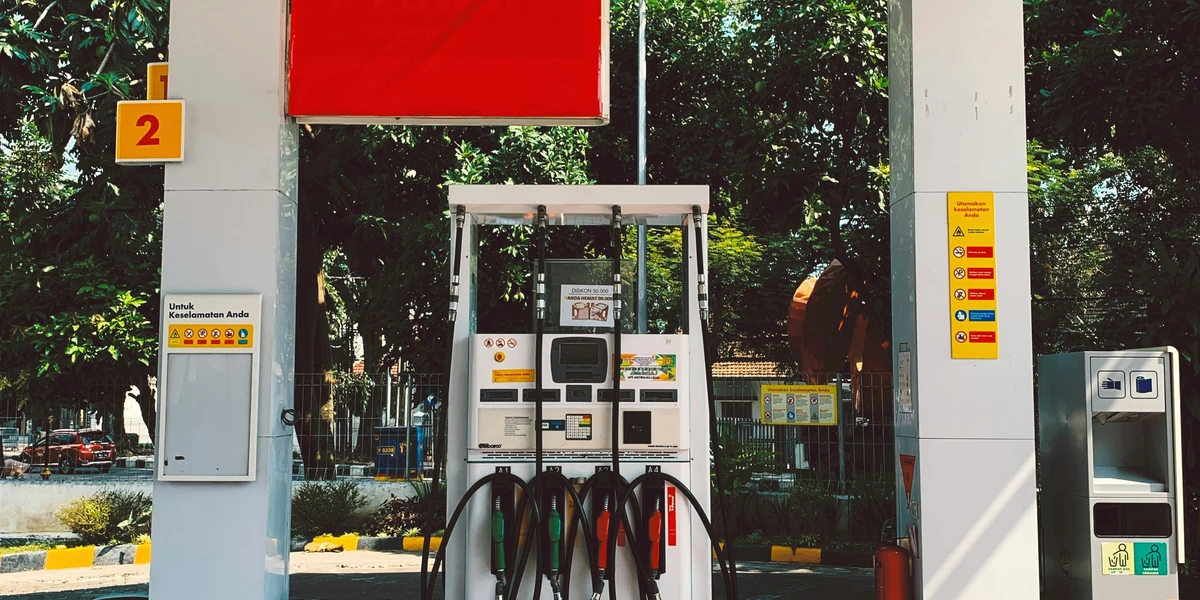
If you've ever stood at a gas pump staring at that yellow-labeled E85 nozzle offering significantly cheaper fuel, you've probably wondered: can I mix this with regular gas? The answer depends entirely on what type of vehicle you drive. Let's clear up the confusion about mixing E85 and regular gasoline once and for all.
The Short Answer: It Depends on Your Vehicle
If you have a flex-fuel vehicle (FFV): Yes, absolutely! You can mix E85 with regular gas in any proportion without worry. In fact, that's exactly what flex-fuel vehicles are designed to do.
If you have a regular (non-flex-fuel) vehicle: No, you shouldn't intentionally mix E85 with regular gas. However, if you accidentally put E85 in your tank, don't panic - it's usually not catastrophic, and there are straightforward ways to remedy the situation.
What Is E85?
Before we dive deeper into mixing fuels, let's understand what E85 actually is. E85 is a fuel blend containing 51% to 85% ethanol and 15% to 49% gasoline. The "85" in its name can be misleading because the actual ethanol content varies by season and location. During winter months, E85 sold at the pump might contain as little as 51% ethanol to help with cold-weather starting, while summer blends typically contain higher ethanol concentrations.
Ethanol is a renewable fuel made from plant materials such as corn, and it's already present in most gasoline sold in the United States at 10% concentration (called E10). What makes E85 special is its much higher ethanol content, which gives it different combustion properties than regular gasoline. For more details, see our complete guide on what is E85.
Can You Put Regular Gas in a Flex-Fuel Vehicle?
Yes, absolutely - and without any concerns whatsoever. This is one of the most common questions about flex-fuel vehicles, and the answer is straightforward: flex-fuel vehicles can run on regular unleaded gasoline, premium gasoline, E85, or any mixture of these fuels.
In fact, many flex-fuel vehicle owners primarily use regular gasoline simply because E85 isn't widely available in their area. Your FFV will run perfectly fine on regular gas, and you don't need to worry about:
- Damaging your engine
- Affecting your fuel system
- Voiding your warranty
- Reducing your vehicle's lifespan
The "flexible" in flex-fuel means exactly that - your vehicle's fuel system can handle the full spectrum from pure gasoline (E0) to E85, and everything in between. The vehicle's sensors automatically detect what fuel you're using and adjust the engine's operation accordingly.
How Flex-Fuel Vehicles Handle Mixed Fuels
Flex-fuel vehicles are engineered with several key modifications that allow them to seamlessly switch between fuel types:
Fuel composition sensors: These sensors detect the ethanol-to-gasoline ratio in your tank in real-time.
Advanced engine computer: The ECU (engine control unit) receives information from the fuel sensors and automatically adjusts fuel injection rates, spark timing, and air-fuel mixture to optimize performance for whatever blend is in your tank.
Ethanol-resistant components: FFVs use stainless steel fuel lines, specially designed fuel pumps, and ethanol-resistant seals and gaskets throughout the fuel system. Regular vehicles use materials that can deteriorate when exposed to high concentrations of ethanol over time.
Variable fuel injection: The engine computer can increase fuel injection by up to 30-40% when running on E85, since ethanol requires more fuel volume than gasoline to produce the same amount of energy.
This means you can literally fill up with E85 on Monday, top off with regular gas on Wednesday, and add more E85 on Friday - your FFV doesn't care and will adjust automatically every time.
Can You Mix E85 and Regular Gas in a Flex-Fuel Vehicle?
Yes - mixing is not only safe but completely normal for FFV owners. You don't need to empty your tank before switching between fuels. You can add E85 to a tank that contains regular gas, or add regular gas to a tank with E85. Your FFV's systems will detect the blend and adjust instantly.
Many FFV owners regularly mix E85 and regular gas to:
- Balance cost savings with fuel economy
- Take advantage of low E85 prices when available
- Extend range when E85 stations are scarce
- Create a custom blend that works for their driving habits
There's no "correct" ratio you need to maintain, and you don't need to calculate percentages or worry about exact mixtures. The beauty of a flex-fuel vehicle is that it handles all of this automatically.
What Happens If You Accidentally Put E85 in a Non-Flex-Fuel Vehicle?
This is where things get more serious, but it's important to understand that accidentally putting E85 in a regular vehicle is usually not catastrophic. It's a surprisingly common mistake, and most modern vehicles can handle it without permanent damage - especially if it's just one tank.
Immediate Effects You Might Notice
If you've accidentally filled your non-FFV with E85, here's what you might experience:
Check engine light: This is the most common symptom. Your vehicle's oxygen sensors will detect abnormal readings because E85 burns differently than gasoline, triggering diagnostic codes related to lean fuel mixture or fuel system issues.
Reduced performance: Your engine may feel sluggish, hesitate during acceleration, or have difficulty maintaining power. This happens because your engine computer is calibrated for gasoline and can't provide the additional fuel volume that E85 requires.
Rough running: You might experience rough idling, engine stumbling, or jerky transmission shifts as the engine struggles to compensate for the wrong fuel.
Hard starting: Your vehicle might be difficult to start, especially in cold weather, because E85 has different volatility than gasoline.
The good news is that, according to experts and mechanics who deal with this regularly, these symptoms typically won't strand you on the side of the road. The Renewable Fuels Association confirms that "one time misfueling should not cause any long-term damage" and that "consumers are usually able to navigate the issue with little trouble."
What You Should Do If This Happens
If you caught it immediately (added only a gallon or two):
- Fill the rest of your tank with regular gasoline
- Drive normally - the diluted mixture should be fine
- The check engine light may appear but should clear after a few drive cycles
If you filled half a tank or more:
- Add as much regular gasoline as your tank will hold to dilute the mixture
- Drive conservatively until you've burned through 2-3 tanks
- Monitor for persistent check engine lights or performance issues
- If problems persist, consult a mechanic
If you filled a completely empty tank with E85:
This is the most serious scenario, but you still have options:
- Do not start the vehicle if possible
- Consider having the tank drained by a professional ($150-$300)
- Or, if you must drive, add as much regular gas as possible first and drive very conservatively to the nearest station to add more regular gas
Long-Term Concerns and When to Worry
One accidental fill-up: According to automotive experts and mechanics who regularly deal with E85 misfueling, a single tank of E85 in a non-flex-fuel vehicle typically causes no permanent damage. Modern fuel systems are more resilient than older systems.
Repeated use: This is where real problems can develop. Continually using E85 in a non-flex-fuel vehicle can cause:
- Fuel line and seal degradation from ethanol's corrosive properties
- Fuel pump damage
- Injector problems
- Catalytic converter damage from running too lean
The key takeaway is that one mistake is usually forgivable, but don't make it a habit.
Can You Put E85 in a Non-Flex-Fuel Vehicle Intentionally?
No, you should never intentionally use E85 in a non-flex-fuel vehicle, even if you've heard that some people do it to save money or boost octane. While some car enthusiasts modify non-flex-fuel vehicles to run on E85 (by reprogramming the engine computer and upgrading fuel system components), a stock non-flex-fuel vehicle should never use E85 regularly.
The risks include:
- Fuel system component damage
- Potential engine damage from running too lean
- Voided warranty
- Failed emissions testing
- Expensive repairs
If you want to use E85 to save money, the correct approach is to purchase a flex-fuel vehicle, not to use E85 in a regular vehicle.
How to Identify If Your Vehicle Is Flex-Fuel Compatible
Many drivers don't realize they own a flex-fuel vehicle because FFVs look identical to their regular gasoline counterparts. Here's how to check:
- Yellow gas cap: Since 2008, most automakers use yellow gas caps on flex-fuel vehicles (General Motors started this in 2006).
- Badge or label: Look for "Flex-Fuel," "FFV," or "E85" badges on the rear of your vehicle, near the model designation, or inside the fuel door.
- Capless fuel fillers: If your car has a capless system, look for a yellow ring around the fuel nozzle opening.
- Owner's manual: Check your vehicle documentation, which will clearly state if your vehicle is flex-fuel compatible.
- Online resources: Visit FuelEconomy.gov and use their vehicle search tool to look up your specific year, make, and model.
According to the U.S. Department of Energy, there were more than 20.9 million flex-fuel vehicles in the United States as of 2022, so there's a good chance you might own one without realizing it. For more details, see our guide on how to tell if your vehicle is flex fuel.
The Benefits of Mixing E85 with Regular Gas (in FFVs)
For flex-fuel vehicle owners, mixing E85 with regular gasoline offers several strategic advantages:
Cost Savings
E85 typically costs $0.50 to $1.00 less per gallon than regular gasoline. However, remember that E85 contains less energy per gallon, so your fuel economy will decrease by approximately 15-30%. The actual savings depend on:
- Local E85 prices vs. regular gas prices
- Your vehicle's specific fuel economy on each fuel
- Your driving patterns
Many FFV owners find that a 50/50 blend provides a good balance between cost savings and acceptable fuel economy.
Higher Octane Rating
E85 has an octane rating of approximately 100-105, compared to regular gasoline's 87 octane. This higher octane can:
- Reduce engine knock
- Allow more aggressive timing in performance applications
- Potentially improve power output in some vehicles
Environmental Considerations
E85 can provide important reductions in greenhouse gas emissions compared to petroleum-derived gasoline. While the exact environmental benefit is debated (considering the agricultural inputs needed to produce corn ethanol), using E85 does reduce dependence on petroleum.
Engine Cleaning Properties
Ethanol has natural solvent properties that can help prevent carbon deposits from building up in your fuel system and combustion chambers, potentially leading to lower maintenance costs over time.
The Drawbacks of Using E85 or E85 Blends
Before you rush to fill up with E85, understand these important trade-offs:
Significantly Reduced Fuel Economy
This is the biggest drawback of E85. The U.S. Energy Information Administration reports that ethanol contains about 33% less energy than pure gasoline. In practical terms, expect:
- 15-27% worse fuel economy on pure E85
- Proportionally less impact with mixed blends
Real-world example: If your vehicle normally gets 25 mpg on regular gas, you might only get 18-21 mpg on pure E85, or about 22-23 mpg on a 50/50 blend.
Limited Availability
While there are over 4,500 stations offering E85 in the United States, most are concentrated in Midwest corn-producing states. If you don't live near E85 stations, the convenience factor may make regular gasoline more practical. Use our E85 station locator to find stations near you.
Cold Weather Performance
E85 can be difficult to start in cold weather, which is why winter blends contain less ethanol. In extremely cold conditions, you might need to add more regular gasoline to ensure reliable starting.
Frequently Asked Questions
Q: Will mixing E85 and premium gas in my FFV give me better performance?
A: Yes, mixing E85 (with its 100-105 octane) with premium gas (91-93 octane) will result in very high-octane fuel that can benefit performance engines. However, you'll still experience the fuel economy reduction from the ethanol content.
Q: If I accidentally put a few gallons of E85 in my non-FFV, do I need to have the tank drained?
A: Probably not. If you fill the rest of the tank with regular gas, the resulting blend will likely be diluted enough (around E20-E30) that you can simply drive it out over a few fill-ups. Monitor for check engine lights and drive conservatively.
Q: Can I switch back and forth between E85 and regular gas in my FFV without any waiting period?
A: Yes, absolutely. You can alternate between fuels on consecutive fill-ups with no issues. Your FFV adjusts instantly to whatever fuel is in the tank.
Q: Does using E85 void my warranty on a non-flex-fuel vehicle?
A: It may, depending on the manufacturer and what damage occurs. If you have a non-FFV and accidentally used E85, it's best not to make it a regular practice, as repeated use could lead to warranty issues if problems develop.
Q: My check engine light came on after accidentally using E85 in my regular car. How long until it goes off?
A: Once you've diluted the E85 with regular gas and driven through several tanks, the light should turn off automatically after several "drive cycles" (starting the car, driving it, and turning it off). If it doesn't go off after you've burned through 2-3 tanks of regular gas, have the codes cleared at an auto parts store or mechanic.
The Bottom Line: Know Your Vehicle Type
The key to understanding whether you can mix E85 with regular gas comes down to one simple question: do you have a flex-fuel vehicle?
For flex-fuel vehicle owners: Mix away! You have complete freedom to use E85, regular gas, premium gas, or any combination. Your vehicle is specifically designed for this flexibility. Experiment with different blends to find what works best for your budget and driving needs.
For regular vehicle owners: Don't intentionally use E85. However, if you accidentally put E85 in your tank, don't panic - it's usually not catastrophic. Dilute it with regular gas as soon as possible, and you'll likely be fine. One accidental fill-up rarely causes permanent damage to modern vehicles.
If you're unsure what type of vehicle you have: Take five minutes to check. Look for a yellow gas cap, check for FFV badges, or look it up in your owner's manual or at FuelEconomy.gov. Knowing whether you have a flex-fuel vehicle empowers you to make informed decisions at the pump.
The ability to mix fuels is one of the key advantages of owning a flex-fuel vehicle, giving you flexibility to optimize for cost, performance, or convenience based on your specific situation. But that flexibility only works if your vehicle has the right equipment - so make sure you know what you're driving before you reach for that yellow-labeled E85 pump.
Find E85 Stations Near You
Use our free E85 station locator to find the nearest E85 pumps and compare prices in your area.
Find E85 Stations