Help! I Accidentally Put E85 in My Car: What to Do and What to Expect
It’s a sinking feeling—you’ve just filled your non-flex fuel car at an E85 gas station by mistake. Maybe you grabbed the wrong pump nozzle, or the price was lower and you didn’t realize it was E85. Whatever the reason, you’re now wondering: Did I just ruin my engine? How much will this cost? What should I do? Take a deep breath.
While this is a mistake you should correct, it’s likely not the disaster you might fear. Let’s walk through exactly what happens when E85 goes into a regular car and what steps you need to take.
What Happens Immediately After Putting E85 in a Non-Flex Fuel Car
Your Check Engine Light Will Likely Come On
If you accidentally put E85 fuel in a car built for regular gasoline, chances are your check engine light will come on. This happens because E85 has a different chemical composition than regular gasoline, and has slightly different effects.
The computer knows the correct air-fuel ratio for regular gasoline (typically E10, with 10% ethanol). E85 has significantly less energy per volume than regular gas, so when your computer tries to maintain the proper combustion ratio, the sensors indicate the engine is running lean (too much air, not enough fuel). The ECU will trigger a check engine light because the readings are outside its normal operating parameters.
Engine Performance Will Suffer
You’ll likely notice several performance issues:
Rough idling: The engine may idle roughly or inconsistently
Hesitation and jerking: When accelerating, your car might hesitate, struggle to upshift, or jerk forward unexpectedly
Reduced power: You’ll experience noticeably less power and responsiveness
Difficulty starting: The car may have trouble starting, especially when cold
Engine misfires: The engine may misfire due to incorrect fuel mixture
One driver described their experience: “I would try to accelerate, but it would remain in the lowest gear, and then after a bit all of a sudden it would upshift and jerk forward.”
Why These Problems Occur
Your non-flex fuel vehicle’s computer is programmed to deliver fuel based on gasoline’s properties. E85 combusts with a leaner mixture compared to gasoline, resulting in a higher air-to-fuel ratio. The engine needs about 25-30% more E85 than gasoline to produce the same amount of power, but your car’s fuel injectors can’t deliver enough fuel volume, and the computer doesn’t know to ask for more.
Additionally, the varying fuel composition confuses the sensors in the fuel system, potentially causing sensor fault codes.
The One-Time Mistake: Will It Cause Permanent Damage?
Here’s the good news: a one-time mistake of putting E85 in a non-flex fuel vehicle shouldn’t cause permanent engine damage.
Experts and mechanics consistently report that one tank of E85 in a regular car, while problematic, is unlikely to result in lasting harm. If you accidentally put E85 fuel in your car, a one-time mistake shouldn’t cause engine damage, though you should still consult a trusted mechanic to ensure your vehicle won’t develop any issues.
Why One Tank Is Usually Okay
Modern vehicles (mid-1980s and later) have fuel systems built to withstand some ethanol exposure. Federal law since 1994 requires vehicles to be compatible with ethanol blends, and most gasoline already contains up to 10% ethanol (E10). While E85’s 85% ethanol content far exceeds what these cars are designed for, brief exposure typically won’t cause immediate catastrophic damage.
The Crucial Caveat: Dilution Matters
The severity of the situation depends heavily on how much E85 you added and what was already in your tank:
Best case scenario: You added a few gallons of E85 to a mostly-full tank of regular gas, creating a blend of perhaps E30-E40. This diluted mixture is less problematic, and you may be able to drive carefully and simply dilute further with more regular gas.
Worst case scenario: You filled an empty tank completely with E85. This requires more aggressive action.
What to Do If You Put E85 in Your Non-Flex Fuel Car
Step 1: Assess the Situation
If you haven’t started the car yet:
- Don’t start the engine
- Call for a tow truck
- Have the vehicle towed to a mechanic who can drain the tank
If you’ve already driven a bit:
- Note how far you’ve driven and how the car is performing
- Evaluate how much E85 you added versus how much regular gas was already in the tank
Step 2: Choose Your Course of Action
Your response should depend on the severity of the contamination:
Option A: Full Tank of E85 or Severe Performance Issues
If you filled an empty or nearly empty tank with E85, or if your car is running terribly:
- **Stop driving immediately**: Don’t continue to operate the vehicle
- **Have it towed**: Call a tow truck to take your car to a mechanic
- **Get a professional drain**: At a service station, they will:
– Drain the E85 fuel from your tank completely
- **Refill with correct fuel**: Once clean, fill with the manufacturer-recommended gasoline
- **Clear diagnostic codes**: The mechanic will clear the check engine light codes
Cost: A full tank drain and flush typically ranges from $200-$500, depending on your location and the extent of the work needed.
Option B: Partial Mix or Minimal Contamination
If you only added a small amount of E85 (a few gallons) to a mostly-full tank of regular gas:
- **Dilute immediately**: Top off your tank completely with regular gasoline to dilute the E85 as much as possible
- **Drive gently**: Avoid hard acceleration and high speeds
- **Continue diluting**: As you burn through fuel, keep filling with regular gas
- **Monitor performance**: Watch for any unusual symptoms
- **Expect temporary issues**: The check engine light may stay on until the system normalizes
If you drove about 45 miles with a mixture (about 3/4 tank E85 mixed with 1/4 tank regular gas), driving on this mixture is unlikely to result in significant damage. Simply refuel with regular gasoline (E87), and the E85 will continue to dilute further. However, if you observe any persistent engine problems such as rough idling or if the check engine light remains on, it’s advisable to have a mechanic inspect your vehicle.
Step 3: After Correction
Clear the check engine light: Refueling with regular gasoline should typically fix the lean mixture problem and eventually clear the check engine light. However, sensor-related issues may need additional diagnosis by a mechanic.
Check your warranty: Be aware that accidentally using E85 may void your engine warranty. Check your manufacturer’s warranty documentation to understand the implications.
Consider an inspection: Even if your car seems to run fine after dilution, consider having a mechanic inspect the fuel system for any issues, especially if you drove any significant distance on E85.
Long-Term Risks: Why Repeated Use Is Dangerous
While one accidental tank is usually manageable, the situation becomes serious with repeated or prolonged E85 use in a non-flex fuel vehicle.
Fuel System Corrosion and Damage
Continually filling a standard gasoline car with E85 can result in serious fuel system corrosion. Here’s what can happen:
Fuel line degradation: Ethanol can corrode certain rubber hoses and seals not designed for high ethanol content
Fuel injector damage: Prolonged exposure can damage injectors, leading to clogging or failure
Fuel pump failure: E85 lacks the lubrication properties of gasoline, potentially causing premature pump failure
Seal and gasket deterioration: Ethanol can cause seals and gaskets to swell, crack, or deteriorate
Engine Performance Decline
Over time, running E85 in a non-flex fuel vehicle causes:
- Decreased fuel economy (25-30% worse)
- Loss of power and responsiveness
- Increased emissions
- Potential engine damage from running too lean
Warranty Void
Perhaps most concerning: when you accidentally put E85 fuel in a car, it may void your engine warranty. That means you could be on the hook for expensive repairs, even if your car is brand new.
How to Avoid This Mistake
Read the Pump Carefully
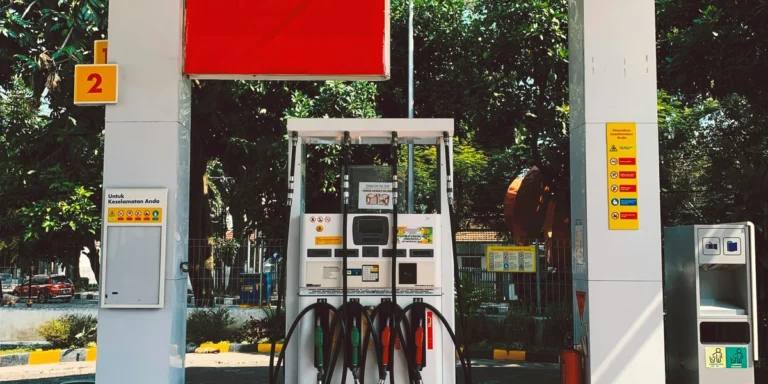
E85 pumps are typically:
- Labeled clearly with “E85” in large letters
- Often colored yellow or have yellow nozzle sleeves
- Usually have warning labels indicating use in flex fuel vehicles only
- Sometimes priced noticeably lower than regular gasoline
Know Your Vehicle
Check your owner’s manual or fuel door label. If your vehicle is NOT flex fuel compatible, it will not have:
- A yellow gas cap or yellow ring around the fuel filler
- “Flex Fuel,” “FFV,” or “E85” badges
- Any indication in the manual that E85 is acceptable
Slow Down at the Pump
Take an extra moment to verify you’re selecting the right fuel grade before pumping. In a rush is when mistakes happen.
Insurance and Cost Recovery
Unfortunately, your auto insurance most likely won’t cover the costs of removing and flushing the wrong fuel from your vehicle. Car insurance typically doesn’t cover misfueling mistakes, as they’re considered driver error rather than an accident.
However, some insurance policies may offer specialty riders that do cover fuel mistakes. Check with your insurance agent—for example, State Farm® customers should check their specific policy to see if they have coverage that might help.
The Bottom Line
If you accidentally put E85 in your non-flex fuel car:
Don’t panic: One mistake usually won’t cause permanent damage
Act quickly: The sooner you address it, the better
Dilute or drain: Depending on severity, either dilute with regular gas or have the tank professionally drained
Avoid repeating: Learn from the mistake and double-check at the pump in the future
When in doubt, get help: If you’re unsure or the car is running poorly, have a professional drain and inspect the system
The cost and inconvenience of properly addressing an E85 misfueling mistake is frustrating, but it’s far less expensive than the potential long-term damage from ignoring the problem or continuing to drive extensively on E85.
Remember: E85 is designed specifically for flex fuel vehicles with specially modified fuel systems. While one accidental tank in a regular car is usually survivable, E85 should only be used consistently in vehicles explicitly designed for it. Always verify your vehicle’s flex fuel compatibility before using E85, and when in doubt, stick with the fuel grade recommended in your owner’s manual.
If you’re looking to intentionally use E85 for its environmental and performance benefits, consider purchasing a flex fuel vehicle for your next car, or look into certified E85 conversion kits. But for your current non-FFV? Stick with regular gasoline and save yourself the headache and expense of misfueling.